 Umrah Gateway team
In this article
- Is Hajj compulsory and Umrah optional?
- When can you perform Hajj and Umrah?
- What are the rites of Umrah and Hajj?
- How long does each pilgrimage take?
- Hajj vs Umrah: side-by-side comparison
- How much do Hajj and Umrah cost from the UK?
- Which is more crowded, Hajj or Umrah?
- Does Umrah count as Hajj?
- Should I do Umrah before Hajj?
- Frequently asked questions
Quick answer: Hajj is the fifth pillar of Islam, obligatory once in a lifetime for every adult Muslim who is physically and financially able, and it can only be performed on set days in the month of Dhul Hijjah. Umrah is a shorter pilgrimage to Makkah that can be performed at almost any time of year, takes a few hours, and is not a pillar of Islam. Umrah's rites (Ihram, Tawaf, Sa'i and shaving or trimming the hair) are all part of Hajj, but Hajj adds the days at Mina, Arafah and Muzdalifah.
Many British Muslims perform Umrah several times before they go for Hajj, and it is common to hear the two words used loosely. Knowing the real differences helps you plan your money, your time off work and your expectations. Below we compare the two pilgrimages point by point, then answer the questions our team hears most often.
Is Hajj compulsory and Umrah optional?
Hajj is fard (obligatory) once in a lifetime for a Muslim who is adult, sane, and able to make the journey: healthy enough to travel, with enough money to cover the trip and to support their dependants while away. Anything beyond the first Hajj is voluntary.
Umrah's ruling is where scholars differ. The Hanafi and Maliki schools generally regard it as a strongly recommended Sunnah, while the Shafi'i and Hanbali schools regard it as obligatory once in a lifetime for those who are able. Either way, it is a highly rewarded act of worship. If you want to know the position of your own school, ask a trusted scholar.
The Prophet ﷺ said that one Umrah to the next is an expiation for what comes between them, and that an accepted Hajj has no reward except Paradise (Bukhari and Muslim). Both journeys are a gift, but only Hajj is a pillar of Islam.
When can you perform Hajj and Umrah?
Hajj has fixed dates: the main rites run from the 8th to the 12th or 13th of Dhul Hijjah, the last month of the Islamic calendar. Because the Islamic year is based on the moon, Hajj moves about 11 days earlier in the Western calendar each year. For the next few years it falls in late spring, which means hot days in Makkah.
Umrah can be performed throughout the year. In practice, Umrah visas usually pause for several weeks around Hajj while Saudi Arabia hosts Hajj pilgrims, so most UK travellers choose dates between the end of the Hajj season and the following spring. Popular windows include Ramadan, Easter, the summer holidays and the Christmas break. Our guide to the best time to perform Umrah compares weather, crowds and prices month by month.
What are the rites of Umrah and Hajj?
Umrah has four essential parts:
- Ihram: entering the sacred state at or before the miqat, with the intention and the Talbiyah.
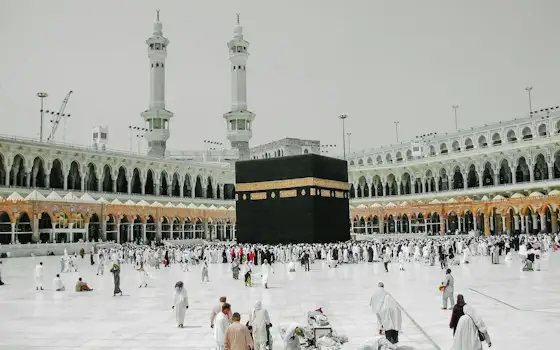
- Tawaf: seven circuits of the Kaaba, starting and ending in line with the Black Stone.
- Sa'i: seven laps between the hills of Safa and Marwah.
- Halq or taqsir: men shave the head or shorten the hair; women trim a fingertip's length.
If you want the full walkthrough with duas, our step-by-step Umrah guide covers each stage.
Hajj includes all of these and much more. Pilgrims spend the 8th of Dhul Hijjah in Mina, stand at Arafah on the 9th (the Prophet ﷺ said "Hajj is Arafah"), spend the night at Muzdalifah, then stone the Jamarat pillars over the following days. There is also the sacrifice, shaving or trimming, Tawaf al-Ifadah, Sa'i, and the farewell Tawaf before leaving Makkah. Missing the day at Arafah means the Hajj is not valid, whereas there is no equivalent "make or break" day in Umrah.
The three types of Hajj
Most pilgrims from the UK perform Hajj Tamattu': an Umrah first, leaving Ihram, then a fresh Ihram for Hajj. Qiran combines Umrah and Hajj in one Ihram, and Ifrad is Hajj alone. So many people perform an Umrah as part of their Hajj trip, but you cannot perform Hajj as part of an Umrah trip.
How long does each pilgrimage take?
The rites of Umrah usually take between three and six hours, depending on crowds, your fitness, and whether you use the ground floor or the upper levels. Most UK travellers book 7 to 14 nights, split between Makkah and Madinah, so they have time for extra prayers, Ziyarat and rest.
The core rites of Hajj take five to six days, but Hajj trips are much longer overall. Pilgrims usually arrive days before the 8th of Dhul Hijjah and stay on afterwards, so a Hajj trip from the UK often lasts two to three weeks or more. It is also far more physically demanding: long walks, nights in tents, and time outdoors in the heat.
Hajj vs Umrah: side-by-side comparison
| Point | Hajj | Umrah |
|---|---|---|
| Ruling | Pillar of Islam, obligatory once for those able | Sunnah or obligatory once, depending on the school |
| Timing | Fixed: 8th to 13th Dhul Hijjah | Most of the year; visas usually pause around Hajj |
| Main rites | Ihram, Mina, Arafah, Muzdalifah, Jamarat, sacrifice, Tawaf, Sa'i, shaving | Ihram, Tawaf, Sa'i, shaving or trimming |
| Time for the rites | Around five to six days | Around three to six hours |
| Typical trip length from the UK | Two to three weeks or more | 7 to 14 nights is common |
| How you book | Through the official Saudi Hajj system and authorised providers | Umrah or tourist visa with a package or independently |
| Cost | Much higher, set by the Hajj packages offered | Packages from £490 per person (7 nights, 3★) |
| Crowds | Very heavy across all sites, all at once | Varies hugely by season |
How much do Hajj and Umrah cost from the UK?
Umrah is far more affordable and flexible. Our Umrah packages start from £490 per person for 7 nights in 3★ hotels, from £690 for 7 nights in 4★, and from £1,230 for 7 nights in 5★. Prices depend on your dates and are confirmed in your quote, and Ramadan and school holidays cost more. For a full breakdown, see how much Umrah costs from the UK.
Hajj costs several times more, because places are limited, the tent camps and transport in Mina and Arafah are part of a regulated system, and the trip is longer. For UK residents, Hajj is booked through the official Saudi Hajj platform and its authorised providers, and the process and packages can change from year to year, so always check the current arrangements before paying anyone.
Which is more crowded, Hajj or Umrah?
During Hajj, millions of pilgrims move between the same sites on the same days, so crowds are intense everywhere, from the Jamarat bridge to the roads out of Arafah. There is no way to avoid them; good organisation and patience are what help.
Umrah crowds depend on when you go. The last ten nights of Ramadan and the school holidays are extremely busy, while some winter and autumn weeks feel calm by comparison. Even in busy periods, you can choose your hour: late night and mid-morning are often easier for Tawaf than the times straight after the five prayers.
Does Umrah count as Hajj?
No. Umrah does not fulfil the obligation of Hajj, however many times you perform it. The Prophet ﷺ said that an Umrah in Ramadan is equal in reward to a Hajj (Bukhari), but scholars agree this is about reward, not about replacing the pillar. If you are able to perform Hajj, it remains due.
That said, many people perform Umrah first because it is a gentler introduction to the Haram, the rites and the climate. Performing Umrah before Hajj can make the bigger journey feel far less daunting.
Should I do Umrah before Hajj?
There is no requirement to do Umrah before Hajj, but it has practical benefits. You learn the layout of Masjid al-Haram, practise Tawaf and Sa'i, get used to wearing Ihram, and see how your body copes with walking and heat. Elderly parents in particular often find a first Umrah reassuring.
If Hajj is already due on you and you can afford only one trip, scholars generally advise putting Hajj first. If you are unsure, our article on Ihram rules for men and women is a good place to start preparing for either journey.
If you are ready to plan your Umrah, our package finder lets you compare dates, hotel standards and nights in a few clicks, and our team is happy to answer any questions along the way.
Related guides: Umrah Plus Trips: Adding Dubai, Turkey or Al-Aqsa · Is 5 Star Umrah Worth It? 3, 4 and 5 Star Compared · How Many Days Do You Need for Umrah from the UK?
Frequently asked questions
Can I perform Umrah during the days of Hajj?
In principle Umrah can be performed at any time, but in practice Umrah visas usually pause around the Hajj season and access to Makkah is restricted to Hajj pilgrims. Most UK travellers plan their Umrah for the months after Hajj.
Is Umrah easier than Hajj?
Yes, physically and logistically. Umrah's rites take a few hours in and around one mosque, while Hajj involves several days of travel between Mina, Arafah and Muzdalifah, often in heat and heavy crowds.
Can women perform both Hajj and Umrah?
Yes. The rites are the same for men and women, with some differences in Ihram clothing and in how the hair is cut. Saudi entry rules for women have changed in recent years, so check the current position when you book.
How many times can I perform Umrah?
There is no fixed limit, and many people perform Umrah several times in their life. Scholars differ on performing repeated Umrahs in a single trip, so ask a scholar you trust if you are planning more than one.
Do I need a different visa for Hajj and Umrah?
Yes. Hajj requires a Hajj visa issued through the official Hajj system, while Umrah can be performed on an Umrah visa or, under current rules, certain tourist visas. Our Umrah visa guide explains the options for UK travellers.